Skip to product information
1 of 6

BuildYourCNC

6'x12' Heavy Duty CNC Machine (greenBull 6X)

6'x12' Heavy Duty CNC Machine (greenBull 6X)

Regular price $6,500.00 USD
Regular price Sale price $6,500.00 USD
Sale Sold out
Shipping calculated at checkout.
Title

The greenBull 6X is no longer sold as a kit or assembled.

The current large-format design is the greenBull v2, available as an instant digital download: greenBull v2 4'x8' and 5'x10' plans. We stock the electronics and mechanical parts to build it, and for existing greenBull machines. This page is kept for reference.

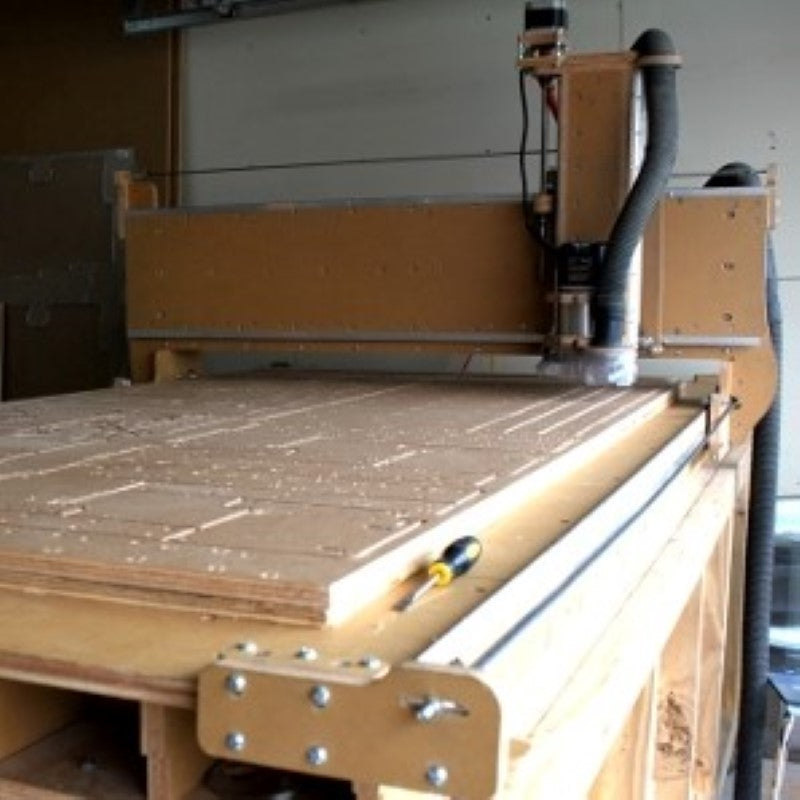
The greenBull 6X is a massive CNC featuring an enormous 6'x12' cutting area. Big jobs require big machinery and this bad boy is definitely up to the task. Table or Torsion Box Not Included Go BIG or Go Home Whether you're looking to automate the process for general woodworking applications, cabinetry, sign-making, construction, or milling other material like acrylic or light aluminum, the greenBull has the power to significantly reduce your production time. The greenBull 6X is big. Who needs a CNC that big? Rick Hebert does. Rick makes cabinets all day and he needs a CNC big enough to handle the material and fast enough to slice production time in half. Click here to see Rick's 6X in action. Technical Stuff
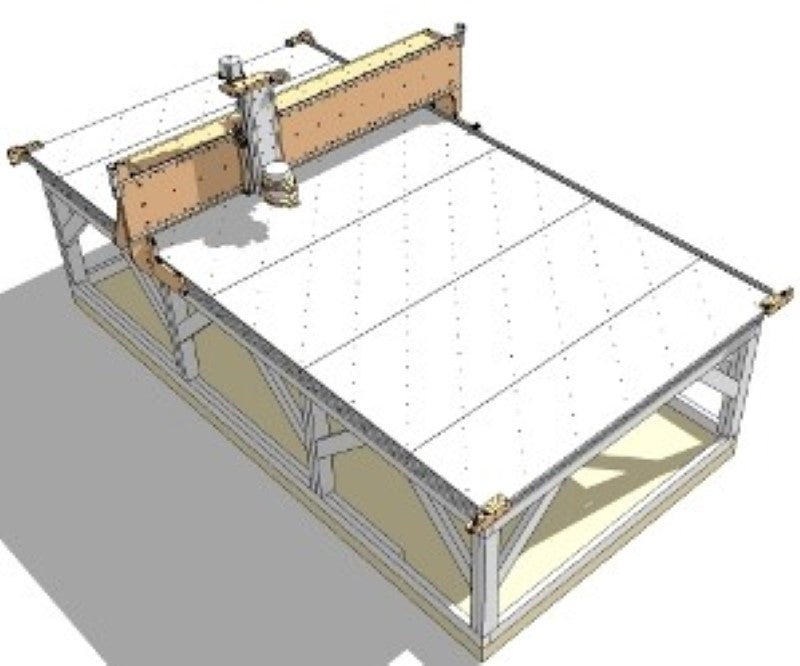
  • Actual table dimension for the 6'x12' are 80.078"x169.5" (the overhang in the illustrations should be 3/4" thick)
  • The overall design has increased rigidity for the new routing/milling area but still maintains the aesthetics that are common across all of the machines on this site.
  • To guarantee that the gantry doesn't flex at all, a series of ribs were added within the gantry box making the entire gantry very similar to a torsion box.
  • The motors selected for all of the axes are NEMA 34 with 1/2" shafts (driven by 6.0 amp drivers).
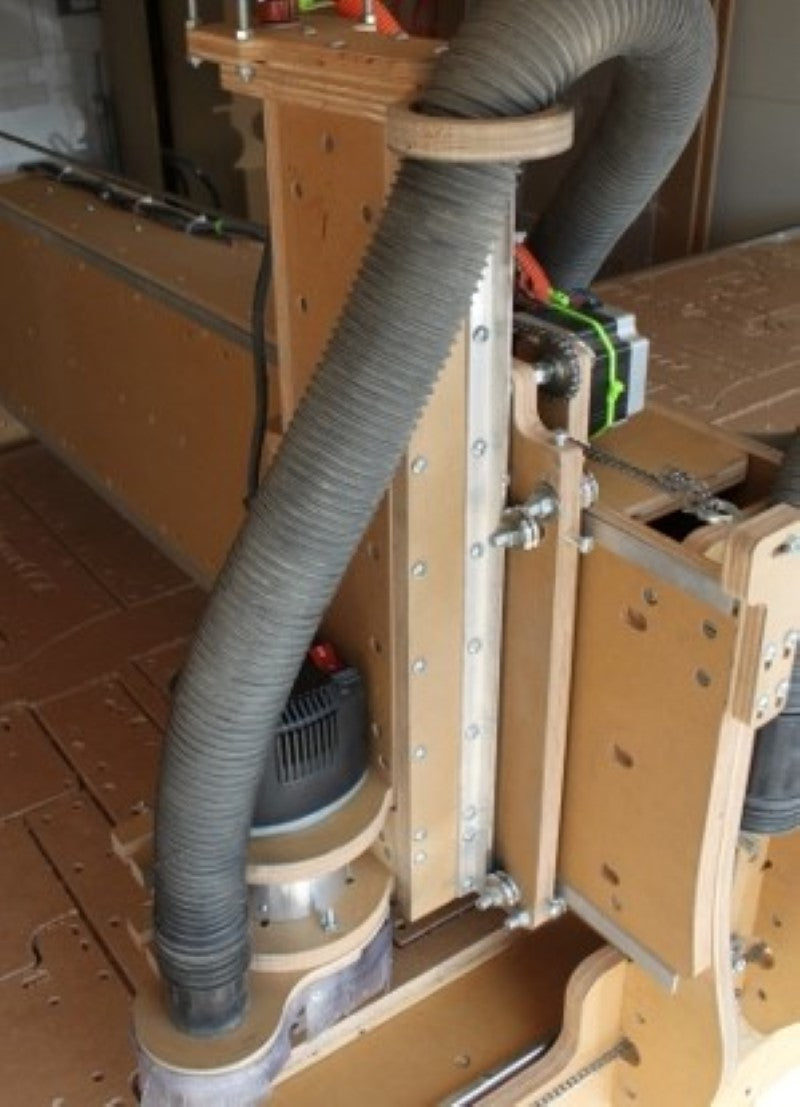
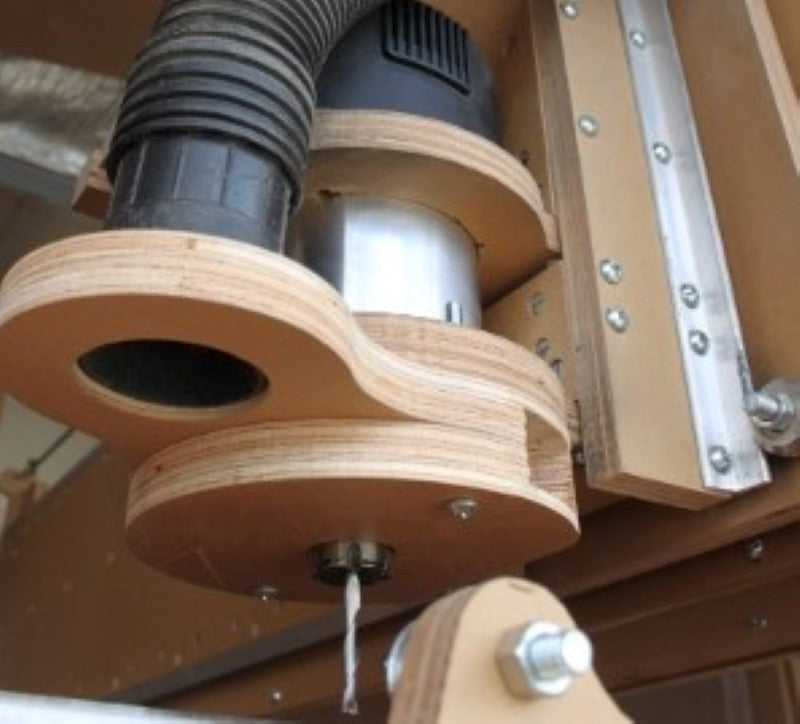
  • The dust shoe is redesigned to provide better dust extraction capability.
Important Things to Know:
  • The 6X used a standard amount of 65 feet of motor cable, which assumes the computer is placed right next to the machine.
  • If you are running a 2.2KW Spindle with Inverter, Laser Attachment, or both, you will need a water cooling system for each. This is a simple system using silicon tubing, a water pump and a 5 gallon bucket.
  • The Spindle will require 12/3, 14/3, or 16/3 gauge cable for wiring from the inverter to the wall. You will also need 4 conductor wire for wiring the Spindle to the inverter as a 4th wire for ground is needed. It is important to understand the electrical requirements for wiring the Spindle, so for this reason we strongly recommend you check with a licensed electrician before attempting to wire it.
Table (Frame) Dimensions:
  • Actual table dimension: 6'x12' is 80.3587"x169.5" (the overhang in the illustrations should be 3/4" thick)
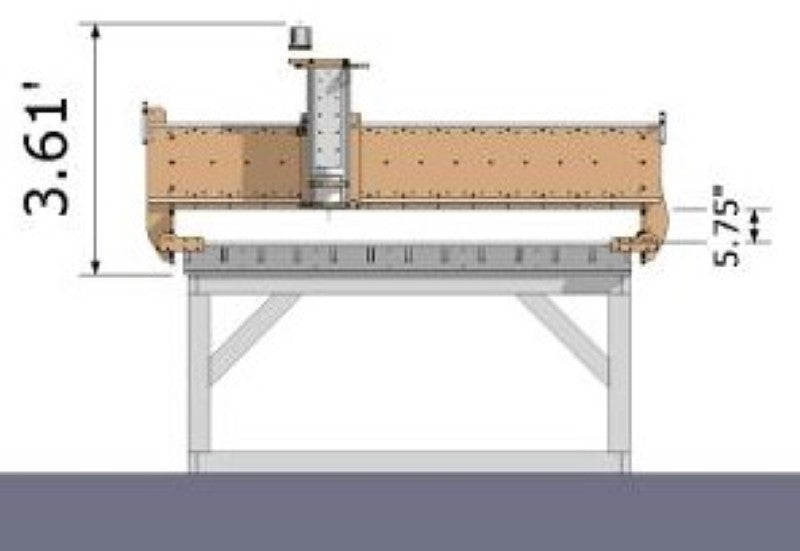
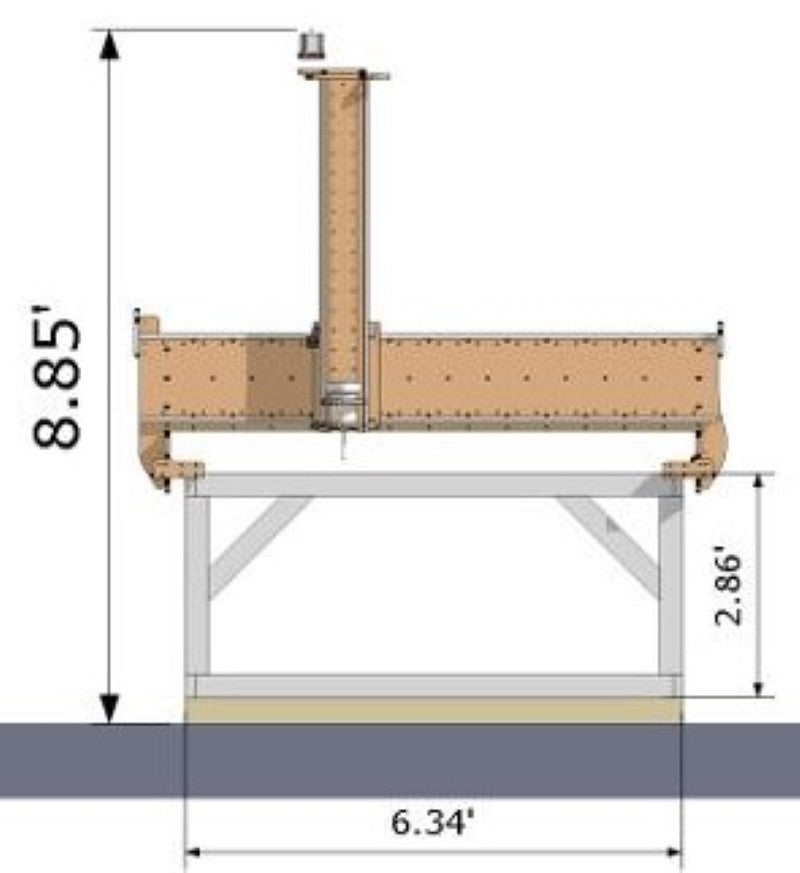
  • To determine the frame dimensions, first consider using the frame height shown of almost 3' (2.86'). The width of the frame should be 4" narrower than the dimension from rail edge to rail edge (6X rail to rail is 80.078"). This will provide a 2" overhang on both sides (6X frame width should be 76.078").
  • The length of the frame should be 4" shorter than the desired length of the rails to provide a 2" overhang on both ends. The travel length will be 20" shorter than the rail length due to the space occupied by the gantry sides.
  • Two long pieces of 3/4" material will need to be placed on top of the frame with the 2" overhang on the sides and the end. These long strips of material will receive the rails and the chain mounts on the ends.
Accuracy and Precision The resolution per axis is variable as you can change the driver's microstepping, but I typically set the parameters so that the mechanical and digital combination configuration yields greater than 1000 steps per inch. The x and y axes mechanical systems are based on roller chain which is tensioned. This provides a reduction in backlash, so the precision is very good (repeatability). The accuracy is generally based on how well the machine in calibrated and squared. Squaring is very simple as the gantry is squared by a combination of adjusting the roller chain sprockets on each side of the gantry and the adjustment of the gantry back hardware. Once the machine is squared and in a relaxed state, the hardware is tightened to maintain square permanently. Calibration is done through software and is as accurate as the physical measurement system is.

Replacement parts for the greenBull 6X

Still running a greenBull 6X? These are the wear parts owners replace most often:

Upgrading the electronics? PoKeys57CNC or Ethernet SmoothStepper, with Mach3 or Mach4.

View full details

Instructions

1
Step 1
This is a demonstration of how one of our customers uses the greenBull CNC router.
2
Step 2
An example of the greenBull CNC router cutting extruded aluminum.
3
Step 3
The greenBull CNC router cutting aluminum. An explanation of the tool (end mill) used, feedrates and depths per pass, and the chips that are ejected from the cutting action.
4
Step 4
This is the greenBull CNC router cutting full depth into 3/4" plywood and testing the dust extraction using flexible plastic material. We don't use this technique as we have found that brush is adequate and brush is what is delivered with the purchased machines.
5
Step 5
Surfacing the spoilboard with the greenBull CNC router. Surfacing should be done frequently to provide the best finish at the underside of the workpiece.
Questions & Answers

Have a Question?

Ask a Question
  • . I purchased the 5x Greembull recently and was hoping I could get some advice and/or plans for the torsion box and table

    A torsion box is a way to create a dead flat surface for the CNC router. A torsion box consists of an internal grid of wood that serves as the structure and a top and bottom layer sandwiching the internal grid layer. Here is an excellent resource on how to make a torsion box. http://www.core77.com/posts/26334/A-Look-at-Torsion-Boxes Make sure to leave 2 inches or more overhang on the top layer (3/4" thick) to make room for the rails and the chain mounts.

  • All of the pics and videos show your cncs cutting sheet materials, I'm interested in carving 3d images in plastic and hardwood slabs up to 2" thick. What machine and software would you recommend?

    All of our CNC machines can carve at that depth without a problem and do 3d carving. Our typical application is cutting sheet materials, but a good percentage of our customers cut 3D bas reliefs or even more complex 3D objects using reference points and jigs. Most of our CNC machines have a Z travel of at least 6 inches for the smaller machines and 7 to 10 inches for our larger machines. The Fabricator Pro has a Z travel of 10 inches. Depending on your application, you will need to consider the length of the end mill (more than the deepest depth of the 3D carving) and the stock that you will be using. If the stock plus the length of the end mill exceed the clearance with the Z axis raised to the top extent, then you will need to consider the way the table/bed of the machine is formed (maybe with a depression to take advantage of the greater need for clearance). The greenBull has the capability of Z axis travel of up to 36 inches, but I would recommend, if milling wood, that the Z-axis not extend more than 12 inches to reduce deflection. Additional Information: Most of the CAM software on the market will have 3D profile machining operation capabilities. CAMBAM has a very nice 3D prpfiling feature. The Vectric line of software can definitely handle this as well.

  • Can the long-Z version do the same work as the short-Z?

    the only difference is the long-Z can travel further.

  • heavy duty 4x8 od z tower height /thanks

    The Z axis travel on the heavy duty 4x8 greenBull CNC machine is 8 inches.

  • Are the motors for the 5x suppose to operate at a high temperature?

    Yes, all of our stepper motors will run hot, depending on the way it is operated. Energy comes in a few forms, light, motion or heat. If the stepper motor is not moving, it is typically holding its position, which will cause the energy to transform to heat energy. If the stepper motor is holding a load, and is moving, it is drawing more current and the energy will be in the form of heat and motion. It is totally normal for stepper motors to be hot to the touch.