


BuildYourCNC
Kundenspezifisches Plug-and-Play CNC-Steuerungselektroniksystem
Kundenspezifisches Plug-and-Play CNC-Steuerungselektroniksystem
Verfügbarkeit für Abholungen konnte nicht geladen werden
Entdecken Sie großartige Leistung mit unserem Plug-and-Play-CNC-Steuerungssystem, perfekt für jede CNC-Maschine oder jeden Router. Erleben Sie eine mühelose Plug-and-Play-Installation und eine Präzision mit hohem Drehmoment von bis zu 12 Nm mit unserer gebrauchsfertigen Lösung.
Beherrschen Sie den Bereich der CNC-Bearbeitung mit unserem Plug-and-Play-CNC-Steuerungssystem, das intuitiv sowohl für Leistung als auch für Präzision entwickelt wurde und Hochdrehmoment-NEMA-34-Motoren bis zu 12 Nm aufnehmen kann. Nahtlos in Ihren Arbeitsablauf integrierbar, hebt dieses System Ihre Handwerkskunst mühelos auf neue Höhen.
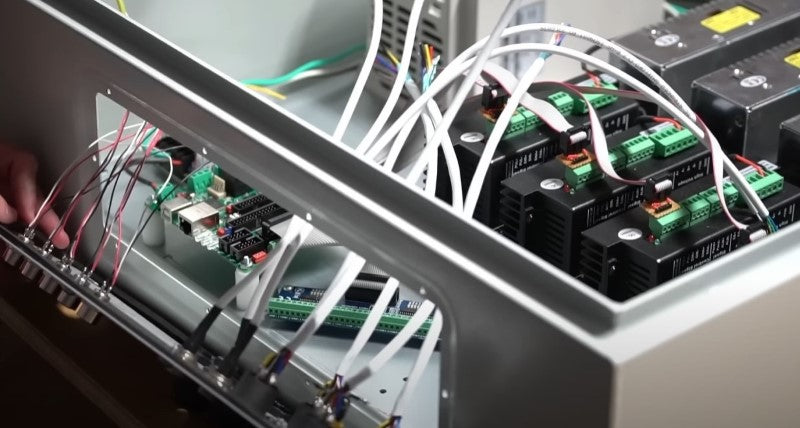
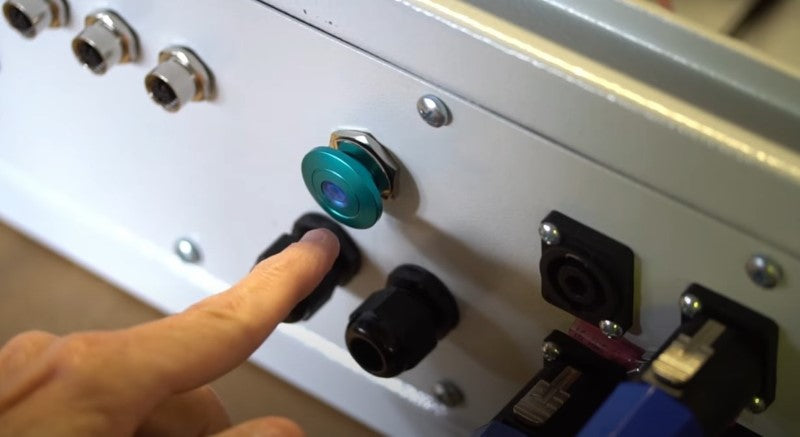
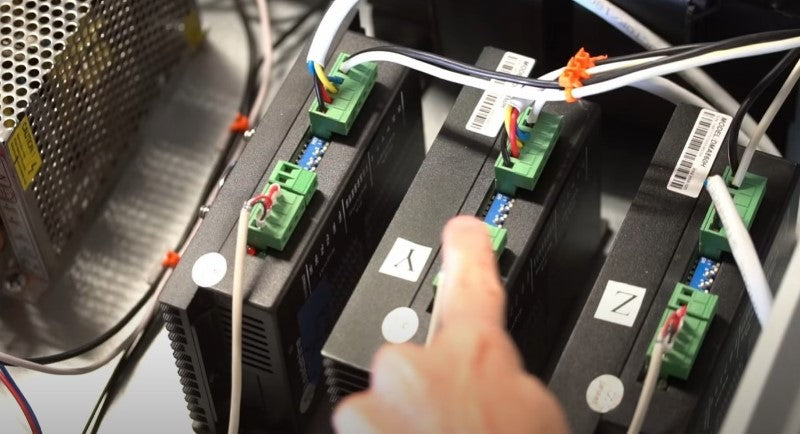
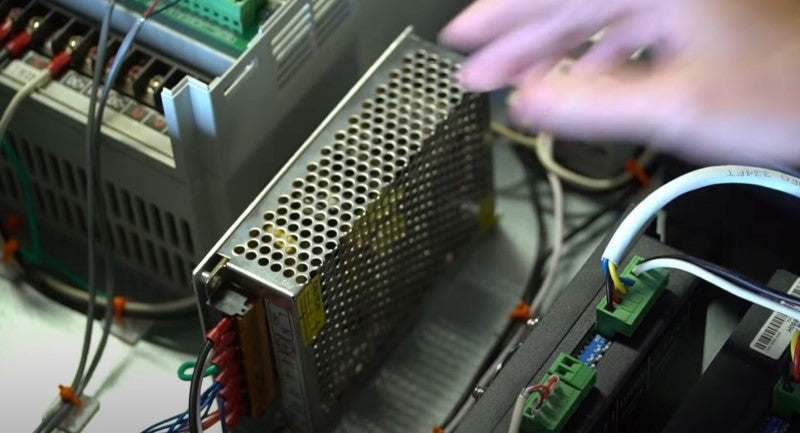
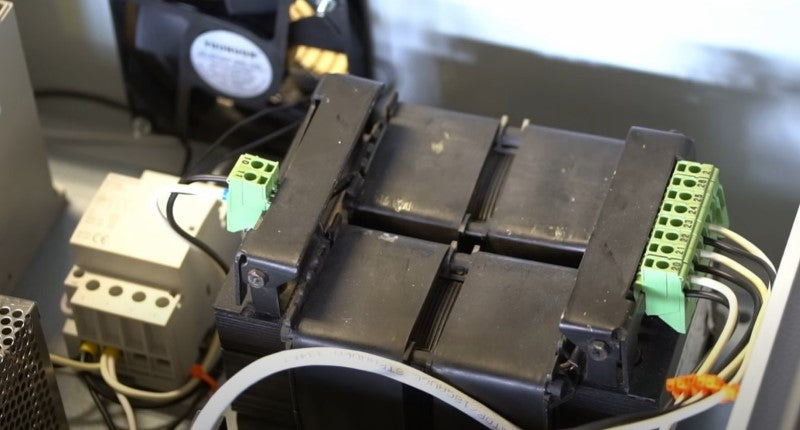
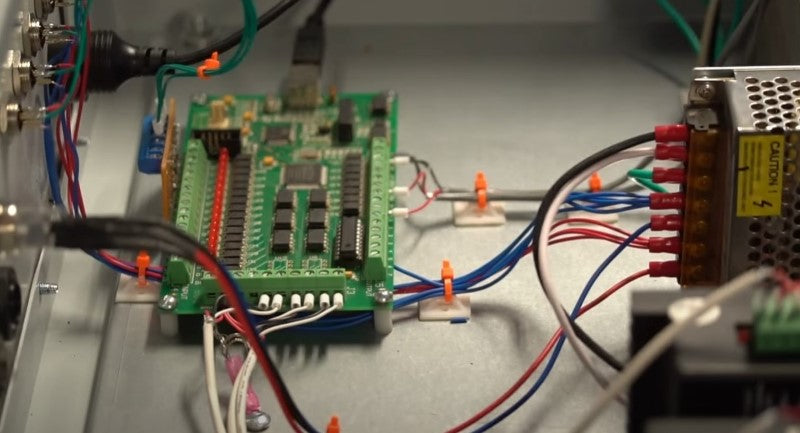
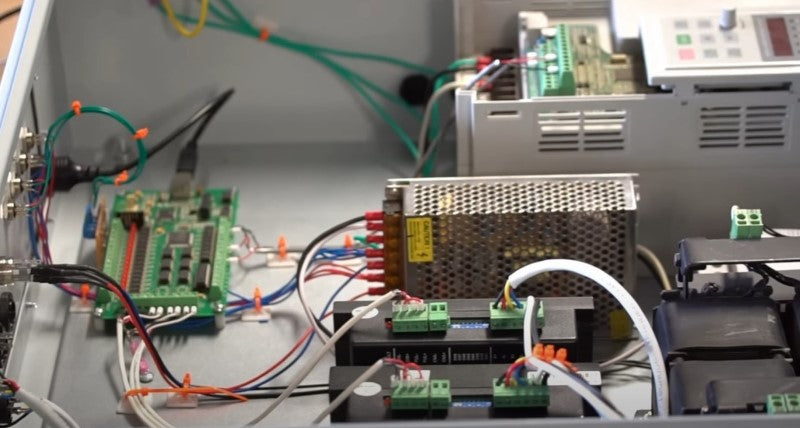
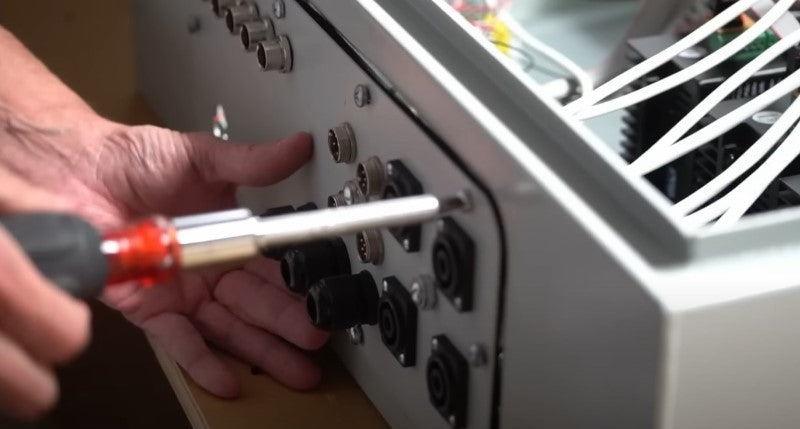
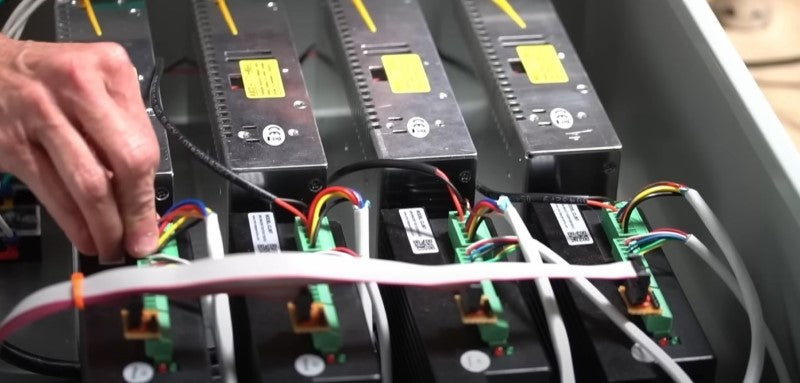
In einem robusten Gehäuse untergebracht, bietet das System eine Komplettlösung mit hochwertigen Schrittmotoren, zuverlässigen Treibern, soliden Netzteilen, einem Power-Drucktaster-Schütz und doppelten Näherungsschaltern für eine genaue Achskalibrierung. Zu Ihrer Sicherheit ist ein Not-Aus-Taster bequem am Gehäuse installiert, um sicherzustellen, dass Sie den Betrieb bei Bedarf sofort stoppen können.
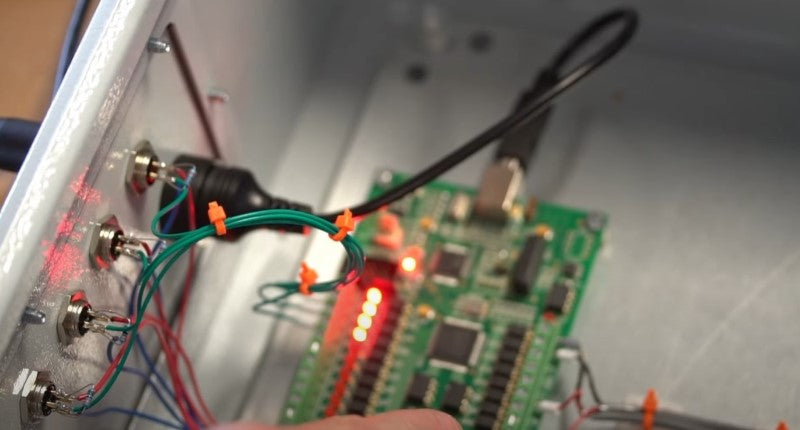
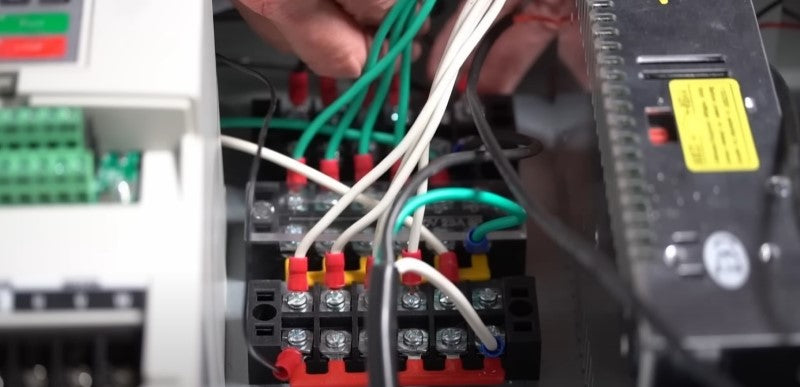
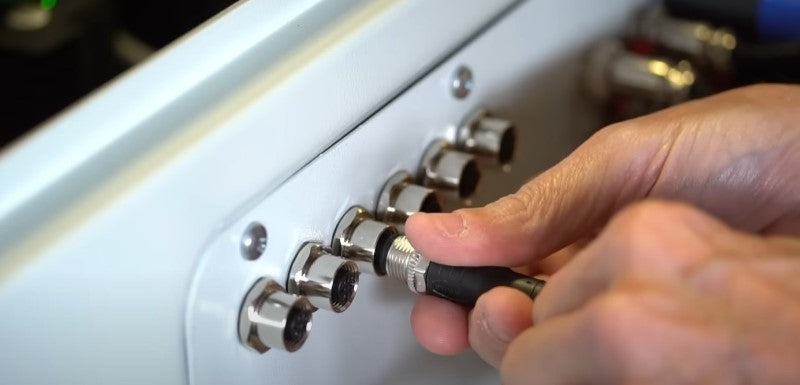
Um die Integrität Ihrer Steuersignale zu gewährleisten, liefern wir geschirmte Motorkabel, Sensorkabel und interne Verdrahtung, um vor elektrischen Störungen zu schützen.
Die Basispreise verstehen: Im Mittelpunkt unseres anpassbaren CNC-Steuerungssystems stehen zwei Basispreisoptionen, um unterschiedlichen Anforderungen gerecht zu werden. Der erste Basispreis bietet das Wesentliche für diejenigen, die nur die elektronischen CNC-Komponenten liefern, einschließlich fachmännischer Arbeit für Verdrahtung, Abschirmung, Steckverbinder und die Standardkabelsätze für eine 4x8 CNC-Maschine, zusammen mit dem robusten Gehäuse und präzisen Befestigungshardware. Der zweite Basispreis ist für diejenigen gedacht, die ein größeres Gehäuse benötigen, das einen Spindel-VFD aufnehmen kann. Wenn Sie einen VFD besitzen oder einen in Ihr Setup integrieren möchten, sollten Sie diese Basispreisoption wählen, um eine perfekte Passform in Ihrem Gehäuse zu gewährleisten. Beide Optionen legen den Grundstein für die zusätzlichen Komponenten und Funktionen, die Sie zur Vervollständigung Ihres Systems auswählen werden.
Preisoptionen und Anpassung: Die Anpassung Ihres CNC-Systems ist mit unseren transparenten Preisoptionen unkompliziert. Jede Auswahl umfasst hochwertige Netzteile, Treiber, Motoren, CNC-Steuerung und einen Schütz für den beleuchteten Ein-/Aus-Drucktaster – für ein kohärentes und reaktionsschnelles Setup. Wenn Sie Ihre eigenen CNC-Elektronikkomponenten nicht selbst bereitstellen, müssen Sie zwischen einem 3-Achsen- oder 4-Achsen-System wählen, je nach Komplexität Ihrer Projekte. Wählen Sie zusätzlich die Größe der Motoren, um den Leistungsanforderungen Ihres Betriebs gerecht zu werden. Diese Entscheidungen bauen auf dem Basispreis auf und bilden ein Komplettpaket, das sofort einsatzbereit ist und Ihre spezifischen Bearbeitungsanforderungen erfüllt. Spezifikationen: NEMA 23 Motoren haben eine doppelte 1/4" (6,35 mm) Welle (doppelte Welle bedeutet, dass es eine Welle vorne und eine Welle hinten gibt), NEMA 34 Motoren haben eine einzelne 14 mm Welle. Die Elektronik enthält die entsprechende Anzahl von Netzteilen, um alle Motoren mit ihrem vollen Drehmoment über die volle Nenndrehzahl des Motors anzutreiben (zum Beispiel benötigt eine 4-Achsen NEMA 23 Elektronik 3 Ampere pro Motor, was sich auf 12 Ampere summiert, sodass zwei 48V-Netzteile mit jeweils 8 Ampere enthalten sein werden). Der Mach3 USB-Controller wird mit den Standard-Elektronikpaketen geliefert. Wenn Sie Mach4 verwenden möchten, rüsten Sie auf den Ethernet-/USB-Controller auf.
Versand Ihres Systems: Bitte beachten Sie, dass die Versandkosten aufgrund der kundenspezifischen Natur jedes Systems, die Größe und Gewicht des Endprodukts bestimmt, nicht im Basispreis enthalten sind. Der Versand innerhalb der USA wird auf ca. 400 USD für Fracht geschätzt. Sie können wählen, Ihre eigene Versandmethode zu arrangieren, oder wir können dies für Sie erleichtern, um sicherzustellen, dass Ihr System sicher und bereit zur Integration ankommt.
Bei jedem Kauf ist ausreichend Kabel für einen 4x8 CNC-Router enthalten. Sollten Ihre Anforderungen wachsen, ist zusätzliches Kabel nur einen Klick entfernt.
Unsere Steuerungssysteme werden individuell an Ihre spezifischen Bedürfnisse angepasst, und wir bitten um eine Vorlaufzeit von zwei Wochen, um sicherzustellen, dass Sie ein Produkt erhalten, das unseren strengen Qualitätsstandards entspricht.
Für diejenigen, die ihr System für Mach3 einrichten, ist eine Mach3-Lizenz erforderlich, die hier bequem erhältlich ist. Mach4-Enthusiasten kommen nicht zu kurz – eine Mach4-Lizenz ist nur einen Klick entfernt.
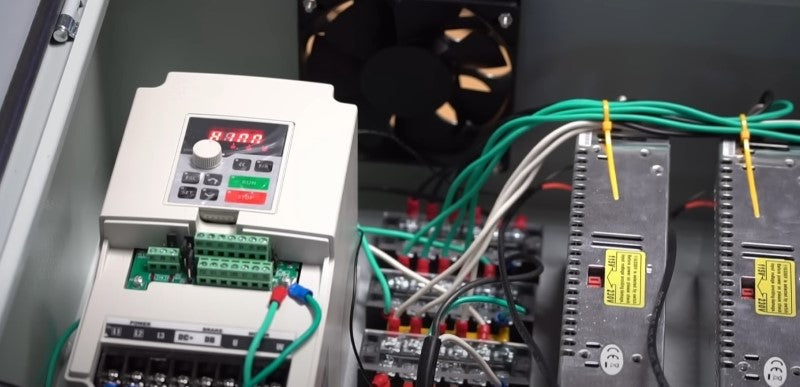
Die Wahl des Spindel-VFD-Upgrades erweitert nicht nur die Möglichkeiten Ihres Systems, sondern passt auch die Gehäusegröße an die zusätzliche Hardware an, wobei sich die Preisgestaltung in dieser Verbesserung widerspiegelt. Der Spindel-VFD ist für die direkte Steuerung vorverdrahtet, was die Verwaltung des Spindelstarts, -stopps und der Geschwindigkeit vereinfacht.
Ein Windows-basierter Computer erweckt dieses CNC-Steuerungssystem zum Leben und bietet eine stabile und benutzerfreundliche Plattform.
Verbessern Sie Ihr CNC-Erlebnis mit unserem Plug-and-Play-CNC-Steuerungssystem, bei dem Sicherheit und Präzision Hand in Hand gehen. Erleben Sie weniger Unterbrechungen und mehr produktive Stunden, egal ob Sie aufwendige Designs schnitzen oder den nächsten Kurs für Ihre Segelabenteuer planen.
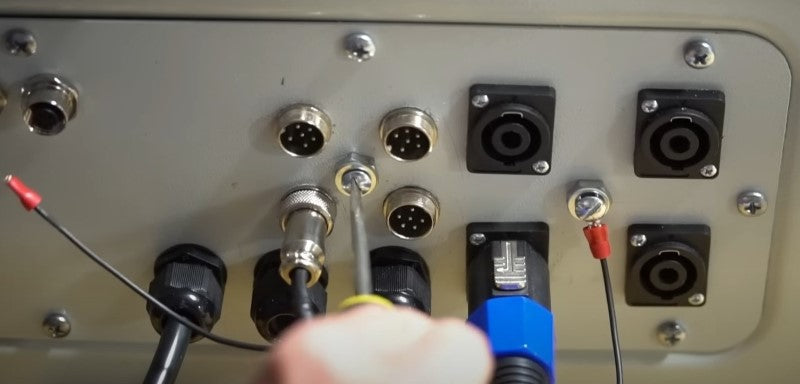
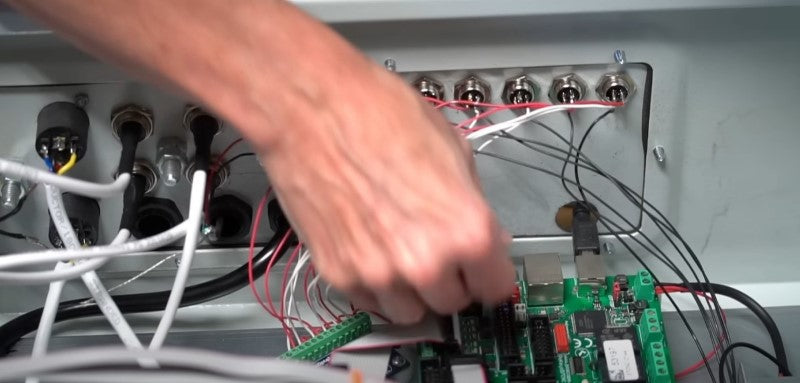
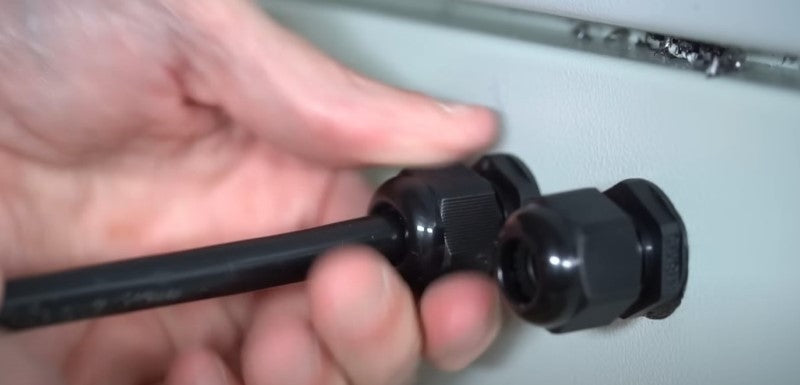
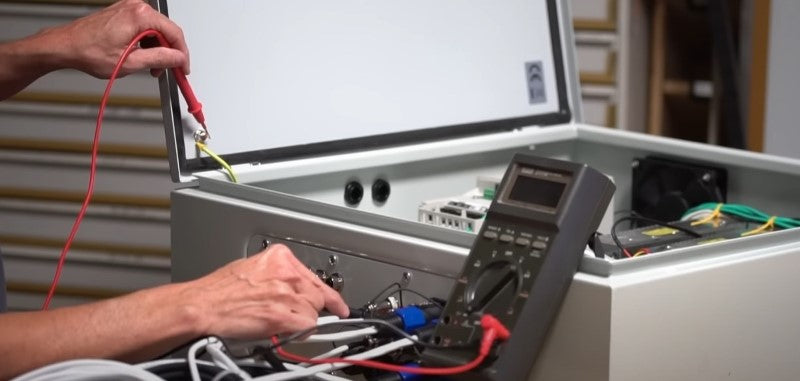
Entdecken Sie unser Handwerk: Wir glauben daran, Ihnen die Präzision und Sorgfalt zu zeigen, die in jedes unserer CNC-Steuerungssysteme einfließt. Um die Qualität und Funktionalität unserer Arbeit wirklich zu schätzen, laden wir Sie ein, eine Reihe von Videos anzusehen, die unser Team beim Zusammenbau dieser Systeme und der Demonstration dessen zeigen, was Sie von Ihrem eigenen erwarten können. Erleben Sie den nahtlosen Prozess und die außergewöhnlichen Ergebnisse, die unsere Systeme liefern.
Teilen
Questions & Answers
Have a Question?
-
I own a custom rug shop where we design a fabricate custom floors of many types, Have you performed any type of testing using your 40 watt and or 80 watt laser for the cutting of thse textiles.
Yes, we have cut many fabrics with the laser. Or CO2 lasers can generally cut fabrics and textiles without a problem. What types of textiles (materials) do you need to use with the laser machine? Is there a layering of materials? Additional Information: We would cut multiple heights of different carpets and even hard surfaces such as Vinyl composition tile, Luxury vinyl tile,etc. and I'm wanting to explore etching into plain color carpets using the laser. I'm contemplating your 5' x 12' machine with the laser/spindle combo. Is it possible to make a site visit to your location and see the capabilities of the equipment ? Additional Information: Carpets are not a problem as long as there are no materials in the carpet or in the carpet binding layers that will off-gas toxic fumes. Check the manufacturer's materials of all of the parts of the carpet. The vinyl should not be a problem, just make sure there is no material mixed within the composite that will off-gas harmful fumes such as chloride. The chloride will mix with the hydrogen in the air and form HCL (hydrochloric acid) which can be harmful if inhaled, but can also affect some of the metallic parts in the machine. We have cut vinyl with the laser with great results.
-
I have your nema 24 motors using the 36v power supply. Should I use the Bipolar series for the wiring the motors since I am using the 36 volt ad not a 24v power supply?
When connecting our power supply, no matter if it is 24 or 36 volts with our drivers/motors, you should always use bipolar parallel. This will allow you to have the best torque at higher speeds.
-
I have installed PCI card parallel port and all pins read 3.5v no matter which jog key is pressed can you suggest a solution?
If you are using a Parallel port card plugged into the motherboard in a PCI slot, or other compatible slot that interfaces directly to the microprocessor, you will need to make sure that the correct I/O address is entered into the configuration for your control software. This I/O address is the first one in the range that Windows, or other operating system, will provide when accessing that information. In Windows, you would need to access this information in the device manager. Select the LPT port that is associated with the added parallel card. The port address will need to be in hex form, not decimal. Other technical information that may help to understand the process: The operating system will provide the address range, the first will be associated with pin 1, and the remaining addresses in the range will associate to the remaining pins (excluding the gnd pins) of the parallel port. This provides high and low signaling for each pin when a one is applied to the address. This is the reason the parallel port is called parallel, since each pin is independent and can output, or receive input simultaneously.
-
I bought the book that you co-authored (Build Your own CNC) a few years ago. Its not till now that I�ll be able to start the project. Are all the parts still available? The book is about 8 years old now so I�m wondering if its still worth building that design? (I don�t see a newer version of the book)
This book offers an excellent platform upon which to learn CNC technology and fabrication no matter how old the book is. If you are new to CNC routers, I wuld highly recommend this book. The book will provide you with the plans and the knowledge to build a capable entry level CNC router and you will learn the fundamentals necessary to become successful with fabrication, maintaining the machine (and almost any machine), and how these complex CNC routers work. The machine kits on this website were created as an upgrade or alternative to the book CNC router build. Specifically the blackToe CNC Router: https://www.buildyourcnc.com/item/cnc-machine-blacktoe-v4-2x4
-
I bought a Blacktoe 2 x 8 three years ago and have always had a problem with the Zid axis. No matter how tightly I've calibrated the axis it always cuts to deep. Can I put a larger Stepper motor on Z-axis using the same motion electronics that came with the original machine.
Modifying the Z-axis to accommodate a larger motor will be a worth while task and is possible, however we have not calibrated the z-axis therefore using the 1600 Steps-per inch in the motor tuning on our machine in our shop. We have not noticed any significant depth increments from not calibrating the z-axis but only from zeroing the z axis too close to the material. Also in your design did you specify the actual depth and the length of tool (end mill/ bit) that you are using?